For hospitality brands
Why your food photography isn't making anyone hungry
Most restaurant and lodge food is lit like a catalogue product. The light, timing and angles that make a plate look delicious, and the fixes for the common mistakes.
Arjav Vyas
Award-winning Filmmaker & Photographer · 11 November 2026 · 3 min read
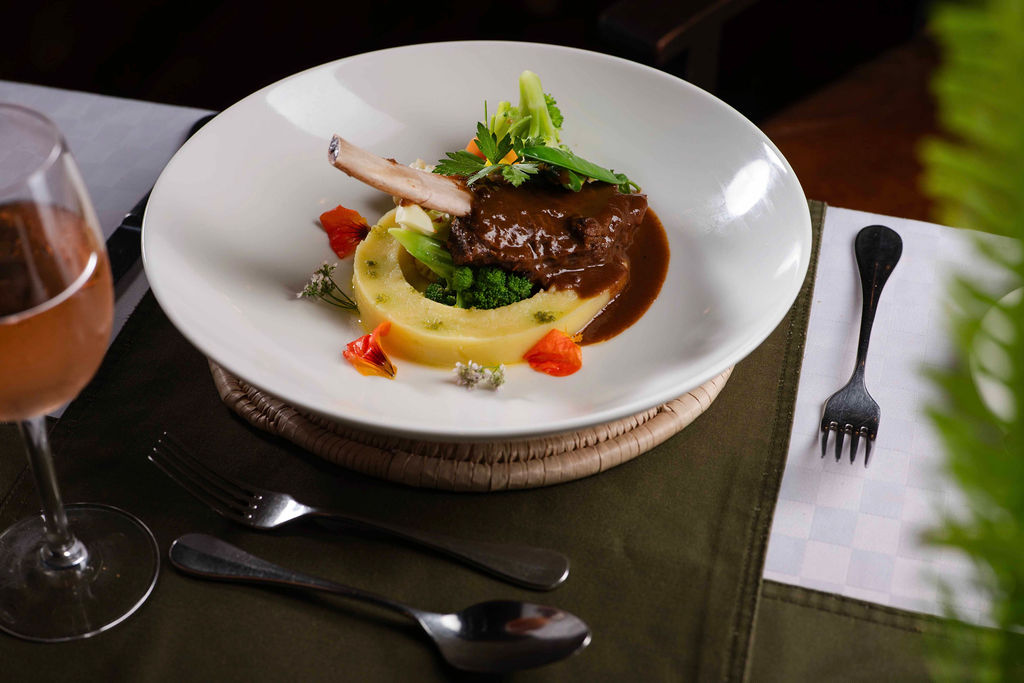
A main course lit from the side, so the sauce catches the light. Shot for Neptune Ngorongoro Luxury Lodge.
Food photography cheat sheet
Light
Side or back
One main source
Still plate
Any speed
Steady camera, low ISO
Pour
1/500s
Freezes the stream
Splash
1/1000s+
Or flash
White balance
Custom
Grey card or white plate
Timing
Minutes
Stand-in plate for set-up
Light from the side, not the front
Front light, including a camera's flash, flattens food. It kills the small shadows that show texture, so crisp looks soft and glossy looks greasy. Move the light to the side or slightly behind the plate. A window does the job beautifully: switch off the overhead lights and put the dish beside it. Use one main light; a white card on the other side is enough to lift the shadows.
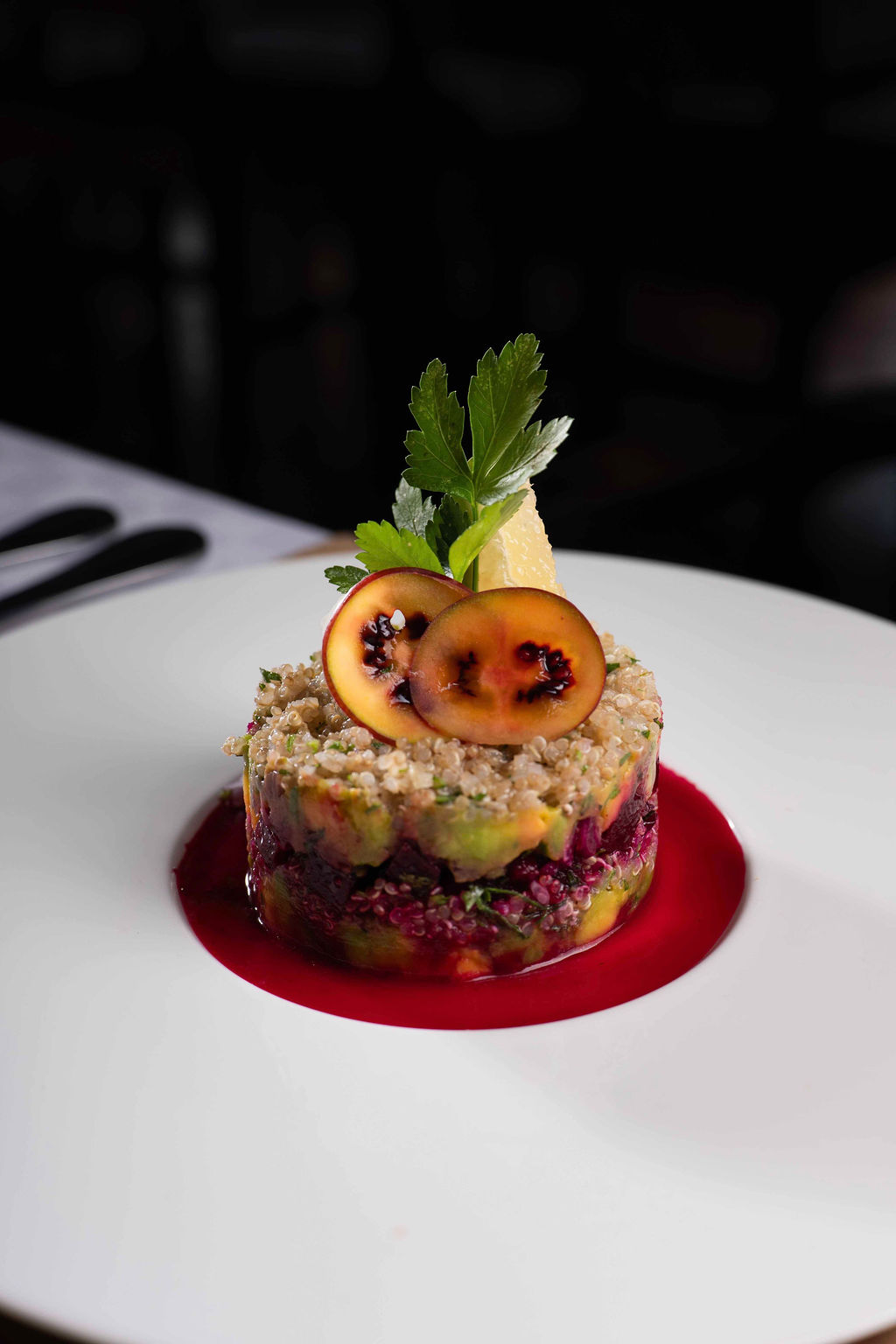
One light from the side and a dark background, and the colours of the plate do the rest. Shot for Neptune Ngorongoro Luxury Lodge.
Timing beats styling
Greens wilt, sauces skin over and steam vanishes within minutes. Work out the angle, light and props with a stand-in plate, then have the kitchen send the real dish and shoot straight away. On a menu shoot, plate one dish at a time. Movement helps too: a pour, a drizzle or a hand reaching in tells the viewer the food is fresh.
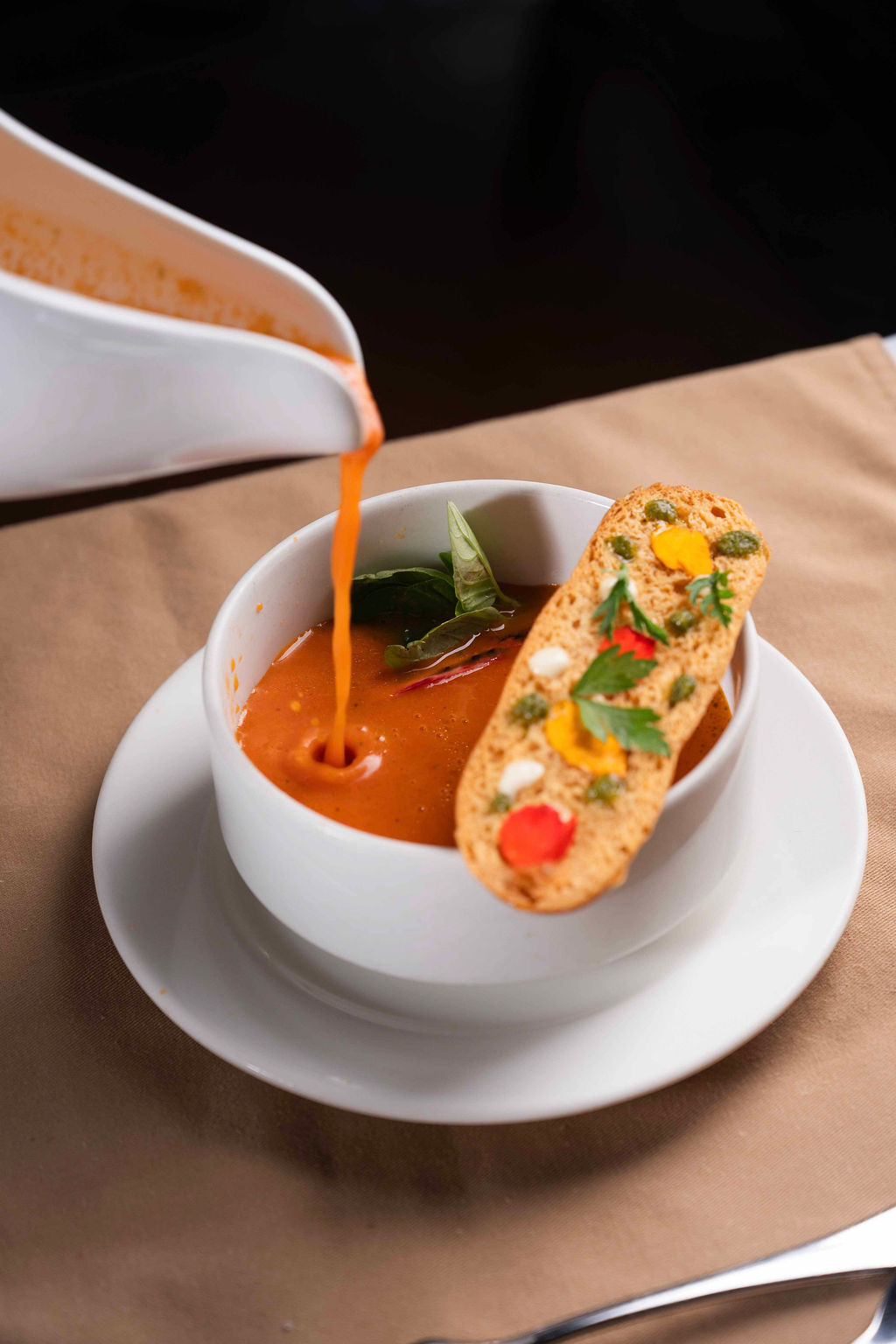
A pour, caught as the soup meets the bowl. Shot for Neptune Ngorongoro Luxury Lodge.
Choose the angle the dish deserves
- Eye level for tall food, like burgers, layered cakes, desserts with height and drinks.
- About 45 degrees for most plated mains. It's how a diner sees them.
- Overhead for pizzas, salads, sharing platters and spreads, where the arrangement is the point.
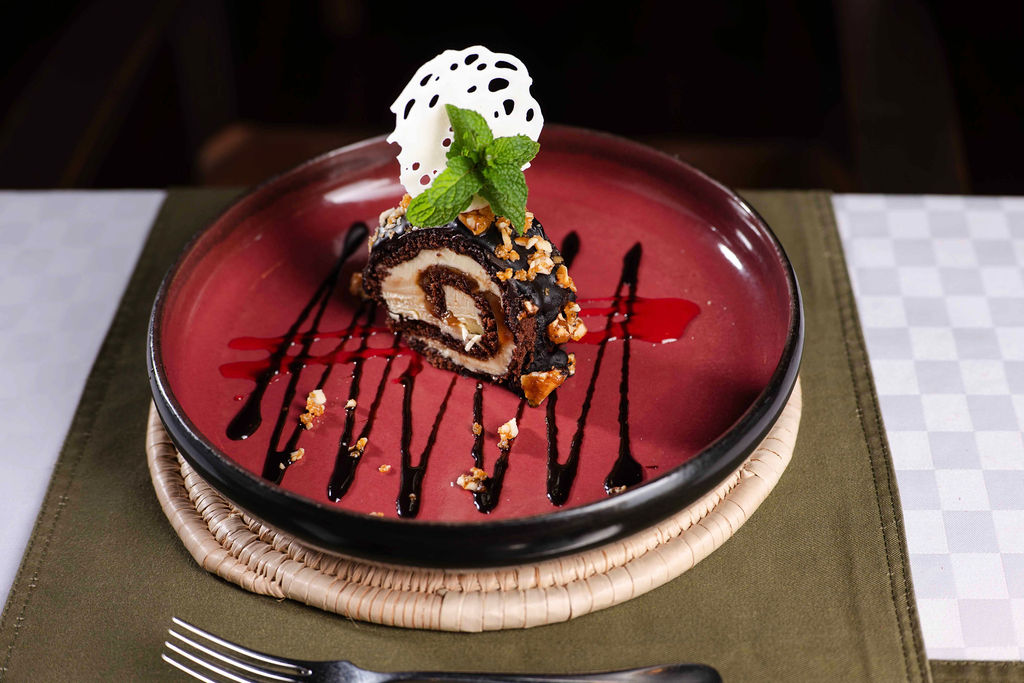
Eye level for height: the garnish reads from the side. Shot for Neptune Ngorongoro Luxury Lodge.
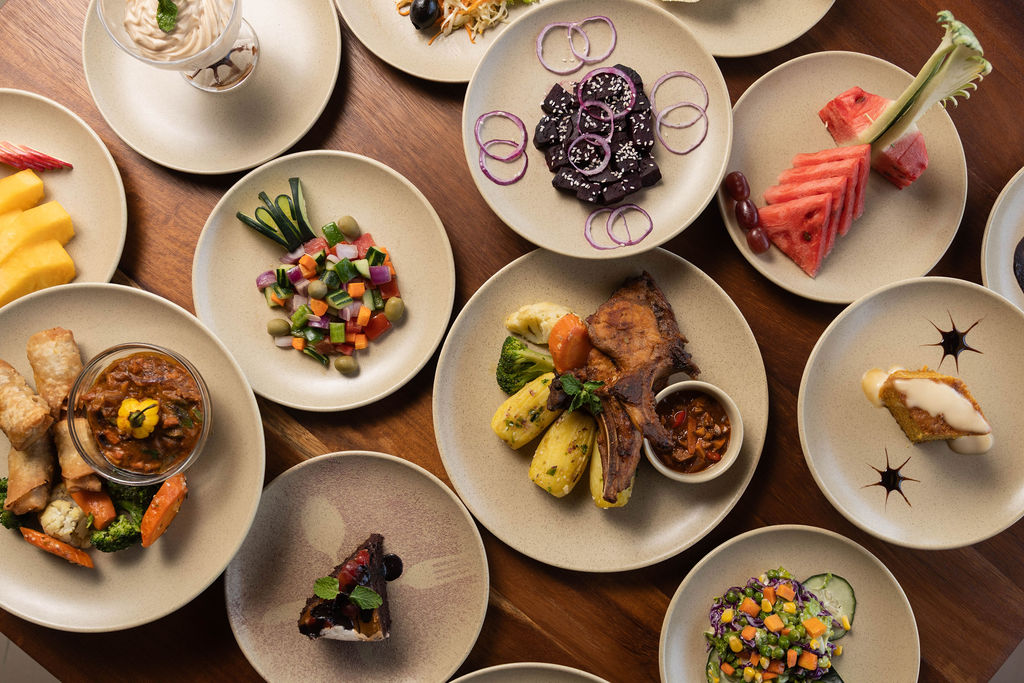
Overhead for a spread, where the arrangement is the point. Shot for Olkambe Simba Lodge, inside Tarangire National Park.
Colour that tastes right
Warm bulbs mixed with daylight turn food yellow on one side and blue on the other, and no edit fully fixes it. Turn off the room lights, set a custom white balance from a grey card or a plain white plate, and edit gently. Food should look the way it does on a good day at the table.
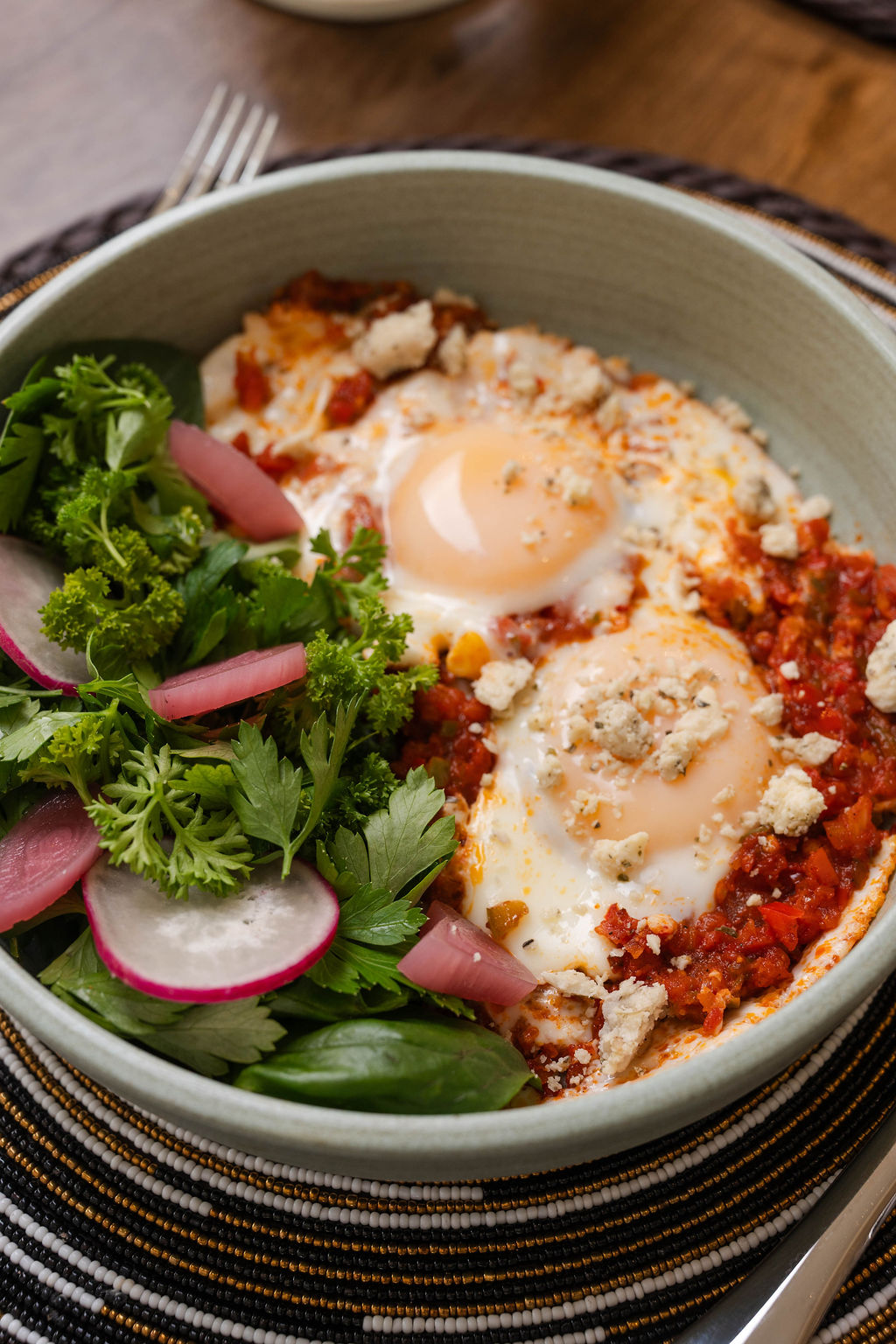
One light source, true colour. Shot for Haile Boutique Hotel.
Show the place, not just the plate
For lodges and hotels, the meal is part of what you're selling. The table it's served on, the glass of wine beside it and the hands that finish it let people imagine themselves there, which a plate on a plain background can't. Our photography page shows how we shoot food for restaurants, hotels and lodges, and our piece on what luxury means on safari explains why the dining experience matters so much.
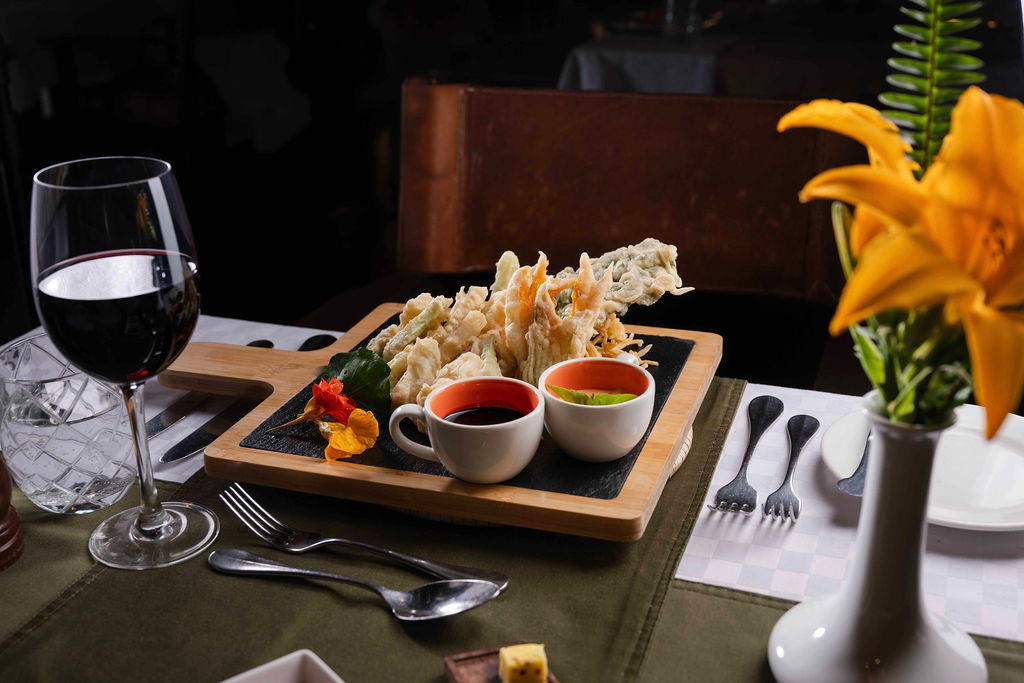
The plate in its setting: the table, the wine, the flowers. Shot for Neptune Ngorongoro Luxury Lodge.
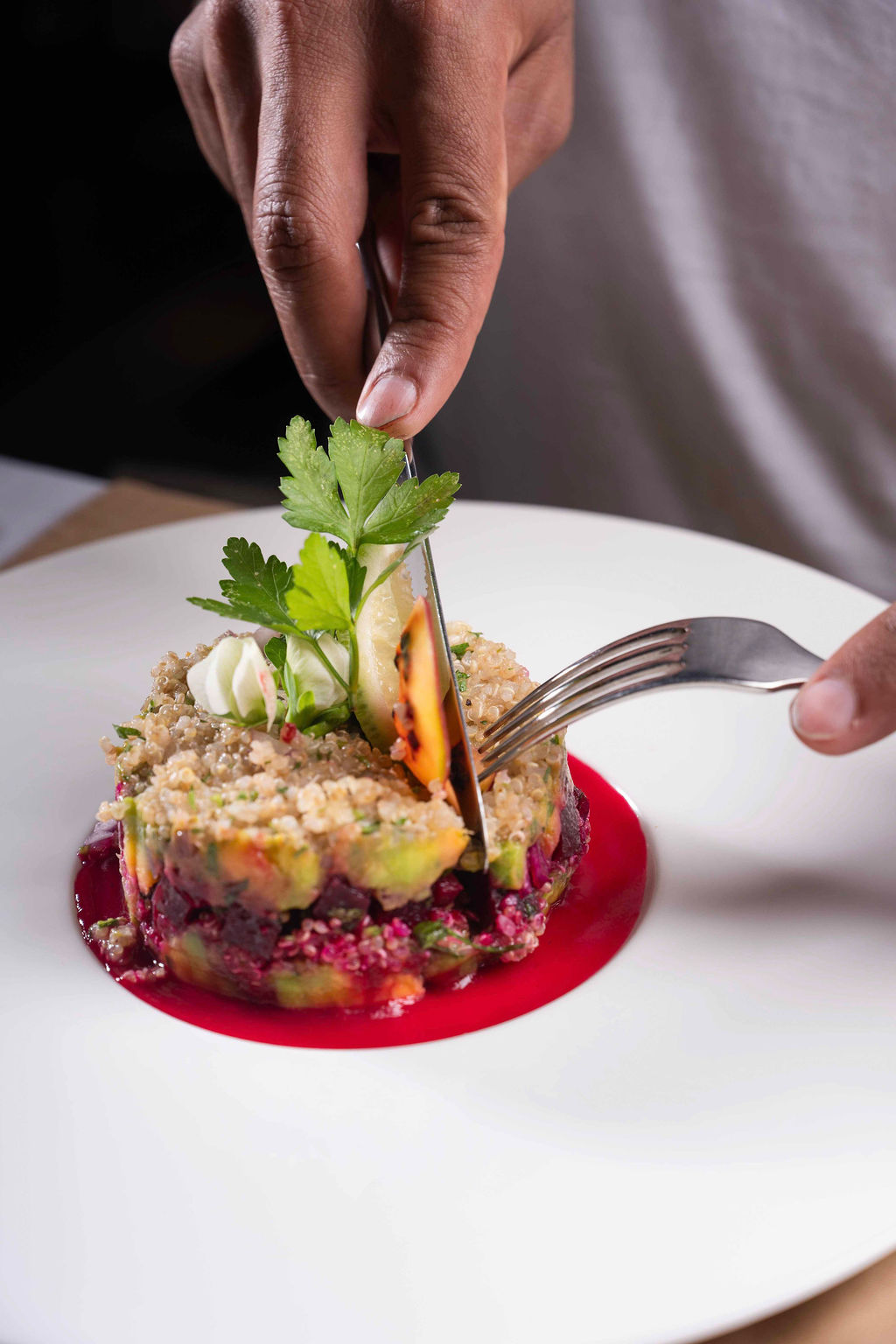
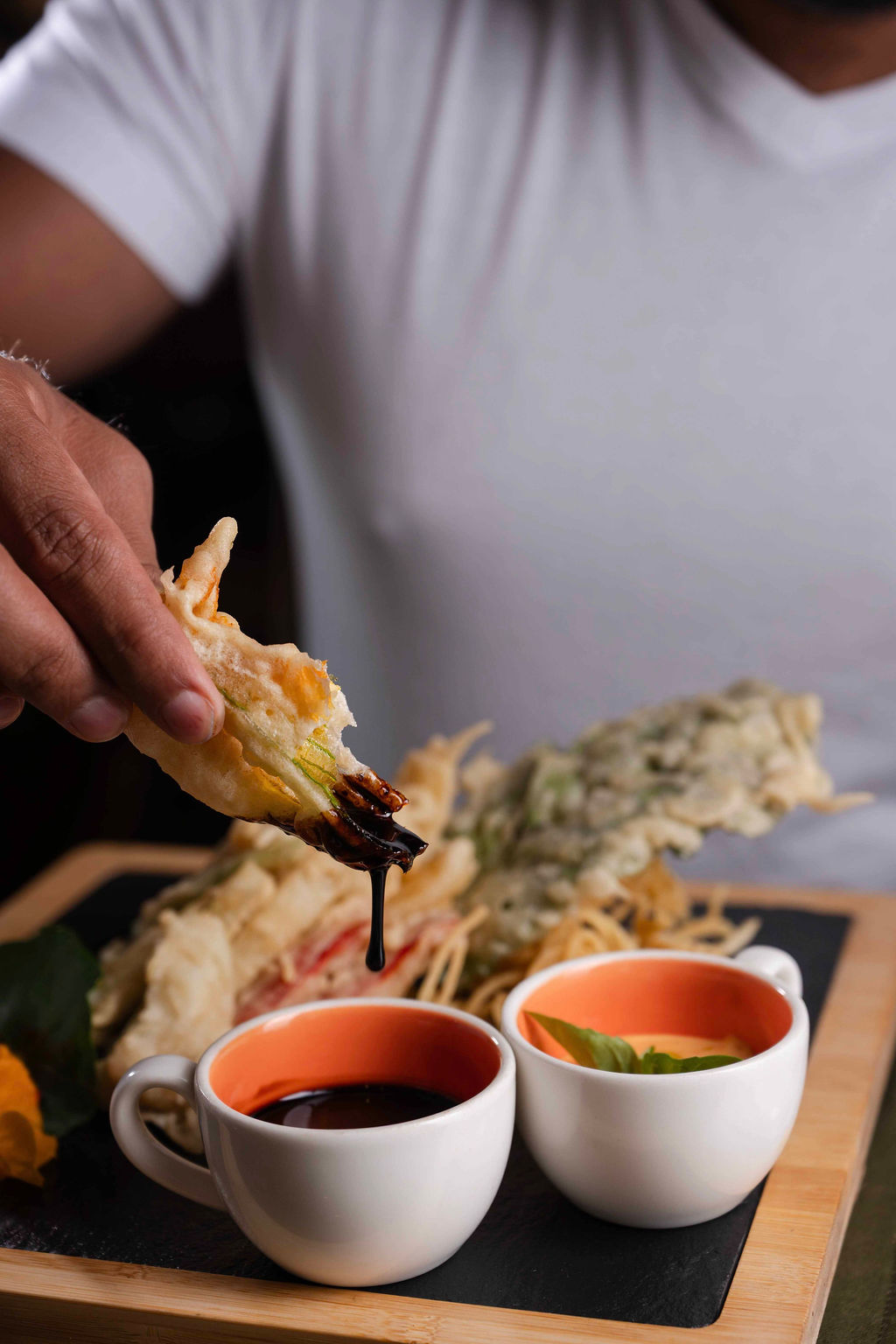
Hands bring a plate to life: a final garnish, a dip into the sauce. Shot for Neptune Ngorongoro Luxury Lodge.
Questions restaurants ask
How do you make food look appetising in photos?
Light it from the side or behind, photograph it within minutes of plating, show texture and a little movement, choose the angle that suits the dish, and keep the styling simple.
What shutter speed freezes a pour in food photography?
Around 1/500s freezes a pour. For splashes and drops, use 1/1000s or faster, or flash.
What is the best angle for food photography?
Overhead for flat dishes and platters, about 45 degrees for most plated meals, and eye level for tall food such as burgers, cakes and drinks.
Can I photograph restaurant food with a phone?
Yes. Use window light from the side, switch off the overhead lights, avoid the flash, shoot the food fresh and keep the background simple.
About the author
Arjav Vyas is an award-winning filmmaker and photographer, and the founder of Merit Concept in Arusha. His team made the official destination films for Zanzibar and Kenya, winners of 20+ festival awards, and creates the films, photography, websites and social media that some of East Africa's finest safari lodges, hotels and tourism boards rely on to win guests. More about Arjav.
More from The Hide
Safari planning · 6 min read
Tanzania park fees, gate hours and travel times for 2026/27
20 November 2026
For hospitality brands · 4 min read
Guests don't compare safari lodges. They rehearse the stay.
18 November 2026
Luxury travel · 4 min read
What true luxury means on safari, and how it differs from mid-range
4 November 2026