Safari photography
Safari camera settings: a field cheat sheet for wildlife
The settings I start every game drive with, and exactly when to change them.
Arjav Vyas
Award-winning Filmmaker & Photographer · 6 October 2026 · 4 min read
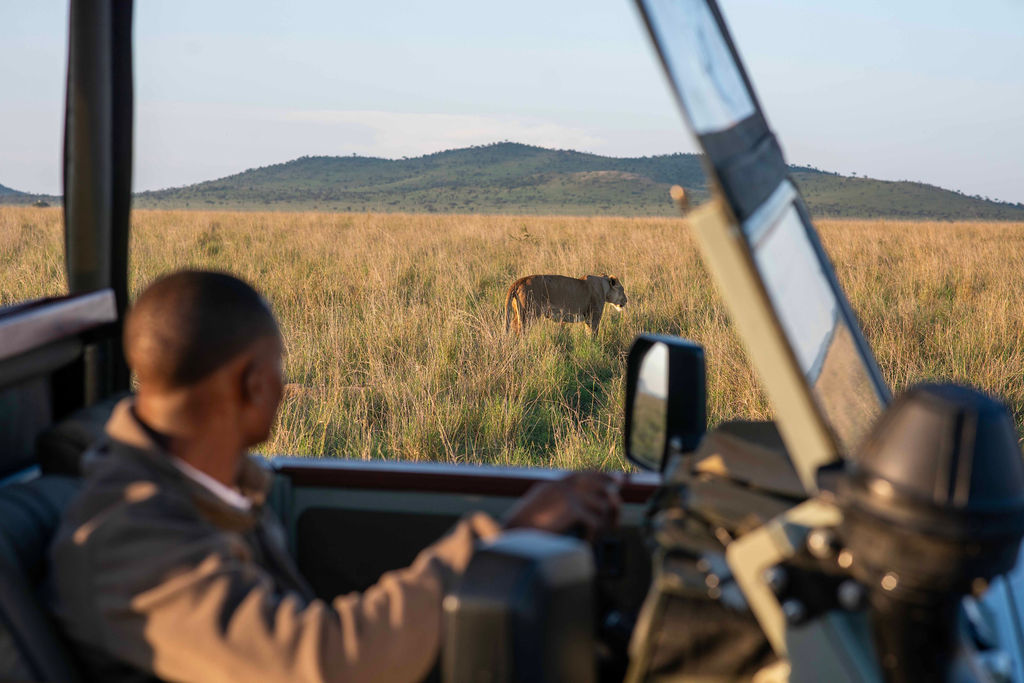
Seen from the vehicle, in the Serengeti. Nikon D810, 85mm, 1/250s, f/5.6, ISO 50. Shot for Neptune Serengeti Luxury Tented Camp.
Photo: Merit Concept
Shutter speed cheat sheet
Default
1/1000s
f/4–f/6.3, auto-ISO
At rest
1/250–1/500s
Keeps ISO low
Walking
1/800–1/1000s
Most of a game drive
Running, fighting
1/2000–1/3200s
Chases and play
Birds in flight
1/2500s+
Up to 1/8000s for small birds
Panning blur
1/15–1/60s
Start near 1/30s
Set it once
Shoot in manual with auto-ISO switched on. You fix the shutter speed the animal needs and the aperture you want; the camera picks the ISO as the light changes. If that feels unfamiliar, aperture priority works too, as long as you set a minimum shutter speed in the ISO menu so the camera can't drift down to 1/125s in the shade.
Use continuous autofocus (AF-C, or AI Servo on Canon) with animal-eye detection if your camera has it. When an animal is behind grass or branches, switch to a single small point and put it on the eye yourself, or the camera will happily focus on the grass in front.
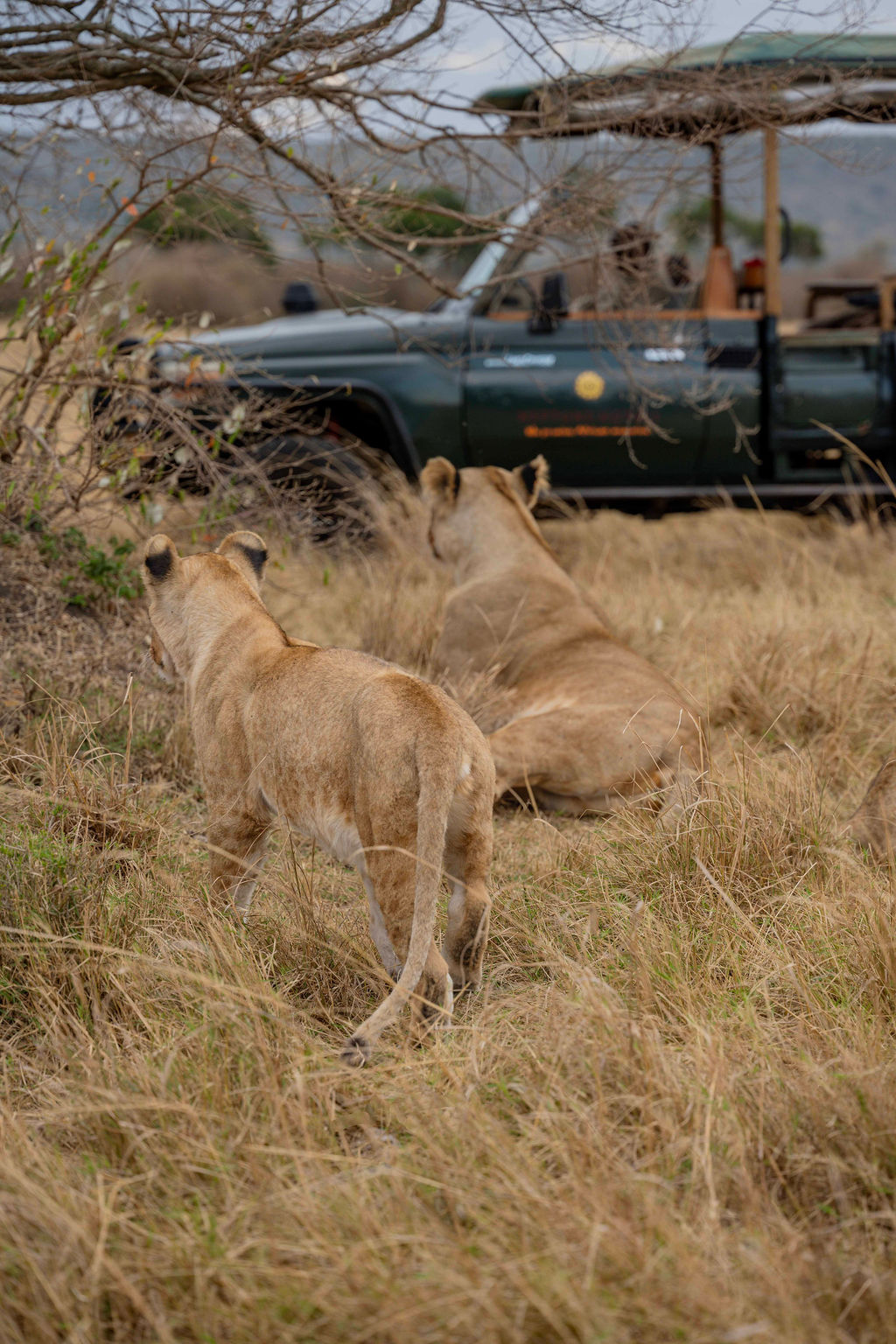
Nikon Z 7II, 105mm, 1/400s, f/4, ISO 160. A slow walk through long grass, the kind that easily steals the focus. A trot would need 1/800s or more. Shot for Neptune Mara Rianta Luxury Tented Camp in the Maasai Mara.
Photo: Merit Concept
The one adjustment to keep making
Exposure compensation. Your meter averages the scene, so it gets fooled by big areas of light or dark. A buffalo against sunlit grass comes out too dark: dial in plus one stop or so. A white egret against a shaded riverbank comes out too bright: dial in minus. Most recent cameras let you use compensation in manual with auto-ISO. Shoot RAW so you can recover what's left.
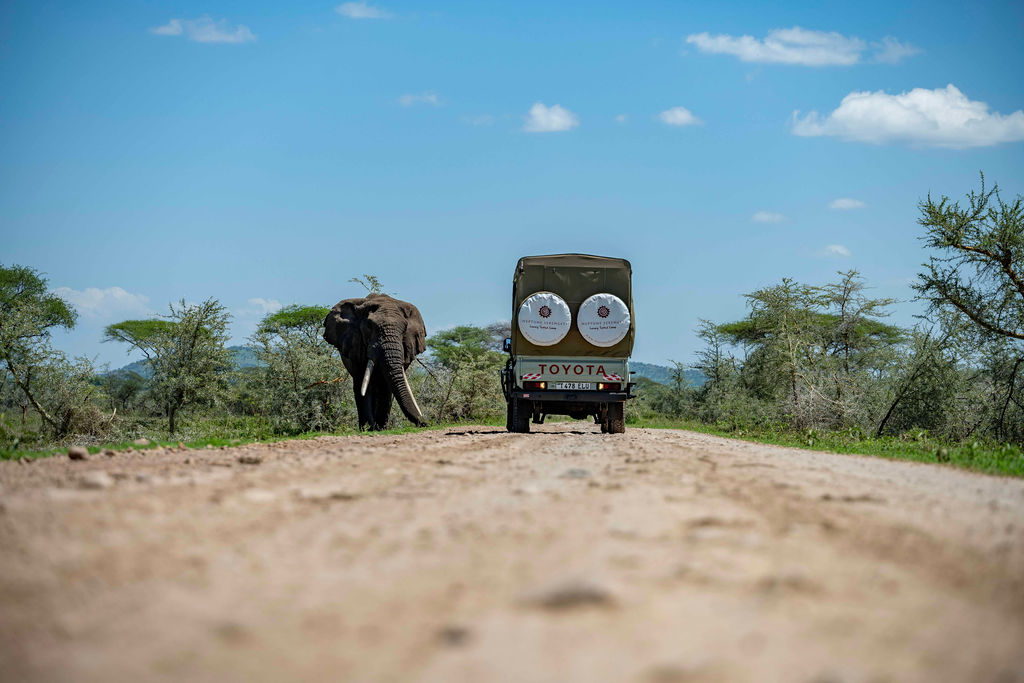
Nikon Z 7II, 105mm, 1/2000s, f/4, ISO 64. In bright light there's shutter speed to spare, so take it. Shot for Neptune Serengeti Luxury Tented Camp.
Photo: Merit Concept
When the light goes
The first and last hour bring the best light and the most activity. Near the equator they're short. At dawn, start around 1/500s at your widest aperture and accept ISO 3200 to 6400; recent full-frame cameras give usable files at 12800. For a still animal you can go slower, but stay above the old rule of thumb of 1/(focal length × crop factor): at least 1/600s with a 400mm lens on a 1.5× crop body. Stabilisation helps with your own shake. It does nothing for a moving animal.
In the last light, decide between a sharp frame and a silhouette. For a silhouette, expose for the sky and let the animal go black.
Keeping steady in a vehicle
A beanbag on the window frame or roof hatch is the most useful thing you can bring. Tripods rarely fit and they pass on the engine's vibration. Ask your guide to switch the engine off for slower shots, brace your elbows, and shoot short bursts so at least one frame lands between movements. If you're planning a shoot for a lodge or a brand rather than a holiday, our photography and films pages show how we work in the field.
Questions photographers ask
What is the best shutter speed for safari photography?
Use 1/1000s as a default, 1/250s to 1/500s for animals at rest, 1/2000s or faster for running animals, and 1/2500s or faster for birds in flight. With a long lens, err on the faster side.
Should I use auto-ISO on safari?
Yes. Manual exposure with auto-ISO lets you fix the shutter speed and aperture while the camera adjusts for changing light. Set a maximum ISO you're comfortable with and use exposure compensation for very bright or dark scenes.
Do I need exposure compensation for dark animals?
Usually, yes. A dark animal against bright grass or sky tends to come out too dark, so add compensation. A white bird against a dark background tends to come out too bright, so reduce it.
Is a tripod useful in a safari vehicle?
Rarely. A beanbag on the window frame or roof hatch is steadier, quicker to use and fits where a tripod won't.
Sources
- Canon Europe: Exposure compensation
- Photography Life: What is exposure compensation and how to use it
- Camera settings under each photograph are read from the original files.
About the author
Arjav Vyas is an award-winning filmmaker and photographer, and the founder of Merit Concept in Arusha. His team made the official destination films for Zanzibar and Kenya, winners of 20+ festival awards, and creates the films, photography, websites and social media that some of East Africa's finest safari lodges, hotels and tourism boards rely on to win guests. More about Arjav.
More from The Hide
Safari planning · 6 min read
Tanzania park fees, gate hours and travel times for 2026/27
20 November 2026
For hospitality brands · 4 min read
Guests don't compare safari lodges. They rehearse the stay.
18 November 2026
For hospitality brands · 3 min read
Why your food photography isn't making anyone hungry
11 November 2026