Safari photography
The best time to photograph the Serengeti, month by month
Where the herds are, what the light does and which months suit which photographs, on one page.
Arjav Vyas
Award-winning Filmmaker & Photographer · 14 October 2026 · 4 min read
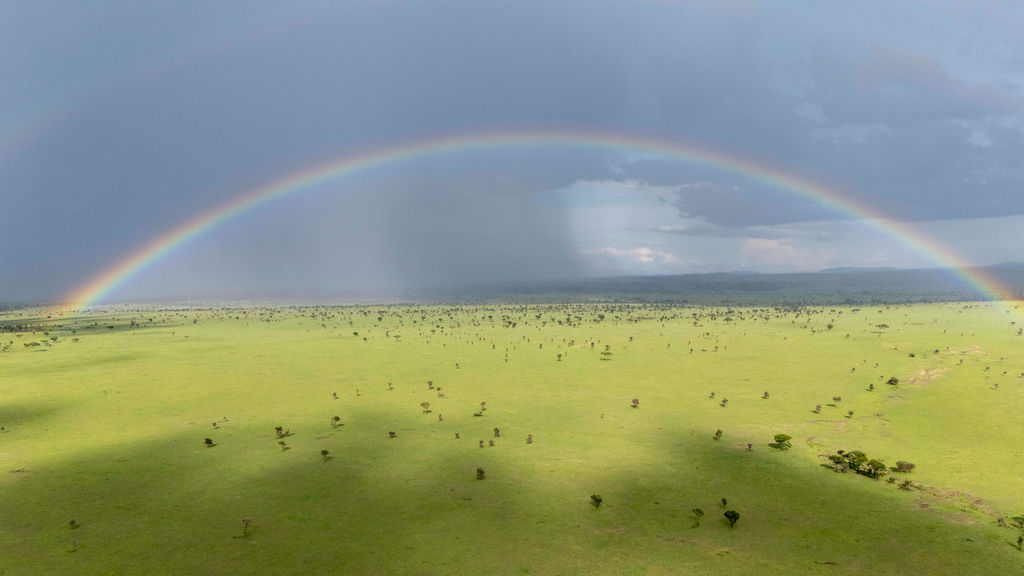
Green season in the Serengeti. Shot for Arukore Simba Camp.
Photo: Merit Concept
About 1.5 million wildebeest and around 200,000 zebra move through the Serengeti ecosystem in a loop that follows the rain and the fresh grass. Where they are decides which photographs are possible. The resident wildlife of the central Serengeti, around Seronera, stays all year.
The year at a glance
| Months | Where the herds usually are | What to photograph |
|---|---|---|
| Jan–Feb | Southern plains, around Ndutu | Calving, newborns, predators |
| Mar | South, starting to move | Last of the calving, big herds on green grass |
| Apr–May | Moving north-west through the centre | Long rains, dramatic skies, few vehicles |
| Jun–early Jul | Western corridor | Grumeti River crossings |
| Jul–Oct | North, along the Mara River | Mara River crossings |
| Nov–Dec | Heading south again | Short rains, herds on the move |
Calving: late January to February
On the short-grass plains of the south, up to 8,000 calves can be born in a day at the peak, and up to 500,000 within two or three weeks. It's the best time to photograph predators at work: lion, cheetah and hyena stay close to the herds. The light is clean after the rain and the plains are green.
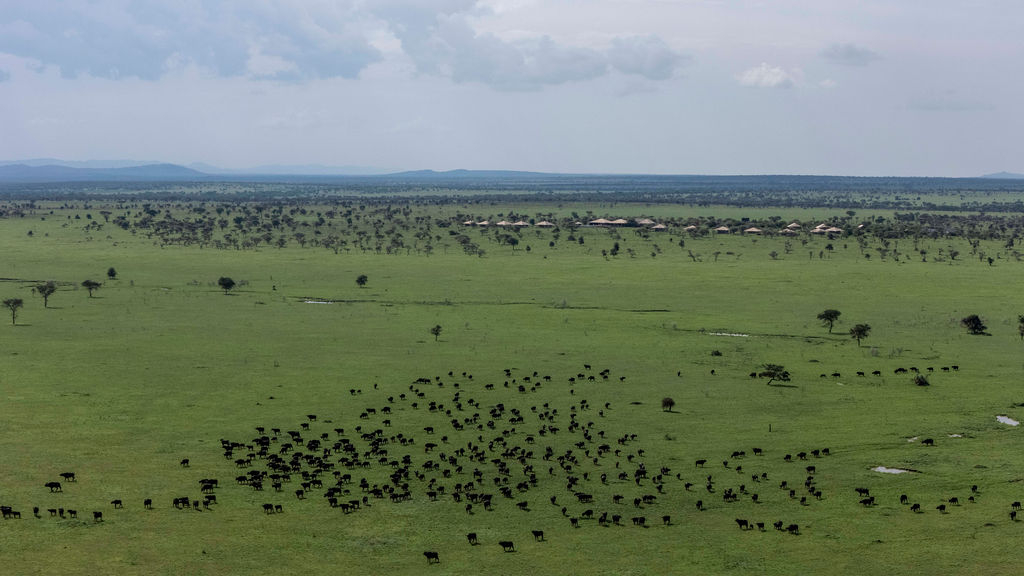
Herds on the green plains, seen from above. Shot for Arukore Simba Camp.
Photo: Merit Concept
The long rains: late March to May
Rain falls hardest in April. Some camps close, roads get muddy and there are far fewer vehicles at sightings. For photographers who can handle a wet day, it means storm light, rainbows and the greenest landscapes of the year.
River crossings: late May to October
The herds reach the Grumeti River in the western corridor from late May to early July, then the Mara River in the far north from July to October, with the most crossings in August and September. Crossings are unpredictable: herds can gather at the bank for hours and then turn away. Bring patience and a long lens, and shoot at 1/2000s or faster once they go.
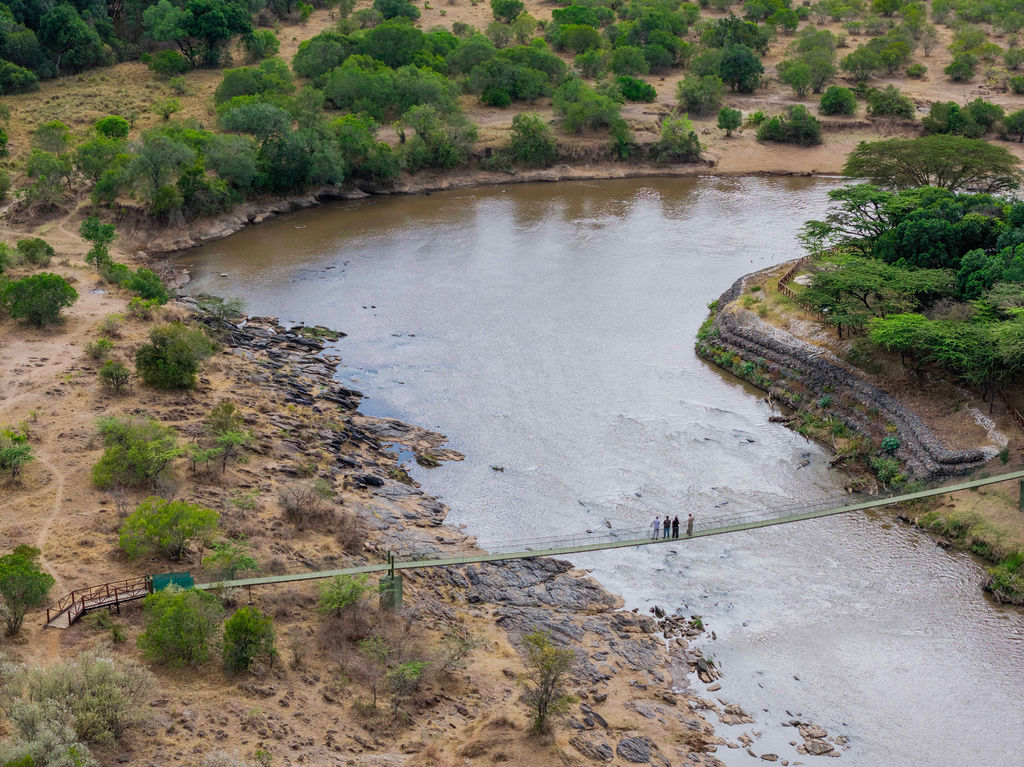
The Mara River, which the herds cross between July and October, seen from above on the Kenyan side. Shot for Neptune Mara Rianta Luxury Tented Camp.
Photo: Merit Concept
The light, all year
Near the equator the day is about twelve hours long all year, and the golden light at each end is brief. At Seronera, sunrise moves between about 6:15am (November) and 6:50am (February), and sunset between about 6:30pm and 7pm. Game drives in the park run from 6am to 6pm, so if you want to be with the animals at first light, stay inside the park.
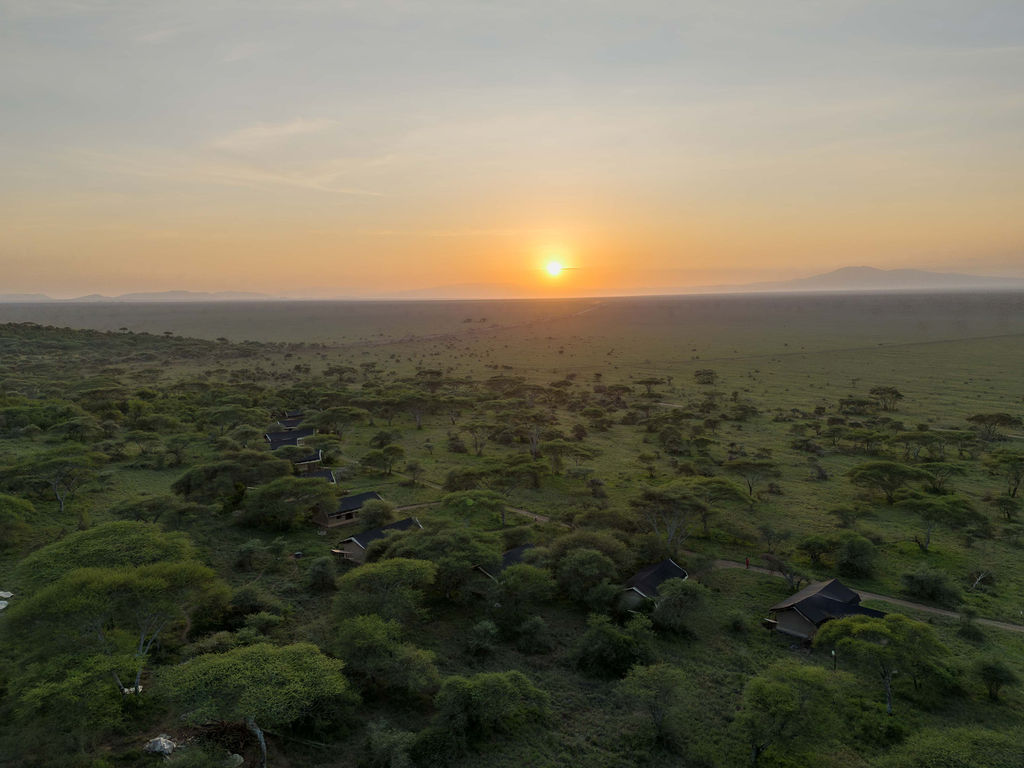
First light over the woodlands. Shot for Serengeti Woodlands Camp.
Photo: Merit Concept
Flying between camps saves those precious early hours. Our guide to fly-in safaris explains how, and the safari camera settings cheat sheet covers what to shoot with once you're there.
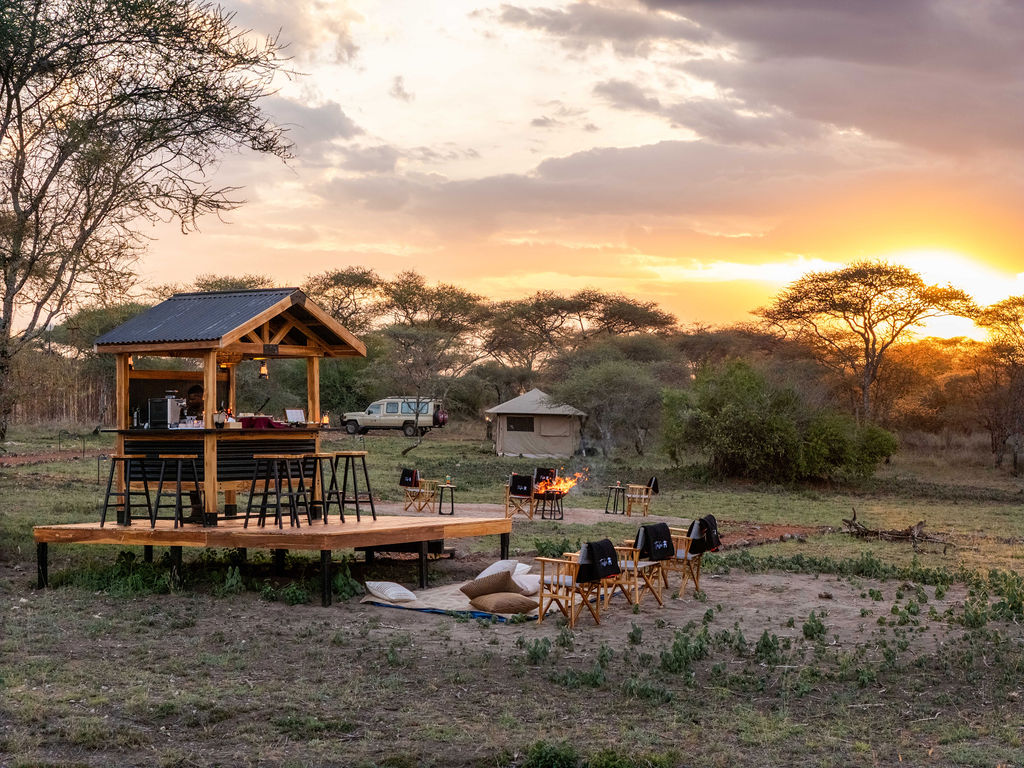
The last light goes quickly near the equator. Shot for Tabi Tanzania in the Serengeti.
Photo: Merit Concept
Questions photographers ask
When is the best time to see the Great Migration in the Serengeti?
It depends on what you want to see. Calving is late January to February in the south; Grumeti River crossings are late May to early July; Mara River crossings are July to October, busiest in August and September.
When is the rainy season in the Serengeti?
The long rains run from late March to May, heaviest in April. The short rains usually fall in November and December.
Is the green season good for photography?
Yes, if you can handle some rain. You get dramatic skies, green landscapes, newborn animals early in the year and fewer vehicles at sightings.
What time are game drives allowed in the Serengeti?
Game drives in the national park are allowed from 6am to 6pm. Sunrise at Seronera is between about 6:15am and 6:50am, depending on the time of year.
Sources
About the author
Arjav Vyas is an award-winning filmmaker and photographer, and the founder of Merit Concept in Arusha. His team made the official destination films for Zanzibar and Kenya, winners of 20+ festival awards, and creates the films, photography, websites and social media that some of East Africa's finest safari lodges, hotels and tourism boards rely on to win guests. More about Arjav.
More from The Hide
Safari planning · 6 min read
Tanzania park fees, gate hours and travel times for 2026/27
20 November 2026
For hospitality brands · 4 min read
Guests don't compare safari lodges. They rehearse the stay.
18 November 2026
For hospitality brands · 3 min read
Why your food photography isn't making anyone hungry
11 November 2026