Safari photography
Fly-in safaris for photographers: more light, less road
Swapping a day on the road for an hour in the air buys you the hours that matter. What you can carry, what the rules say about batteries, and how to shoot from the window.
Arjav Vyas
Award-winning Filmmaker & Photographer · 28 October 2026 · 4 min read
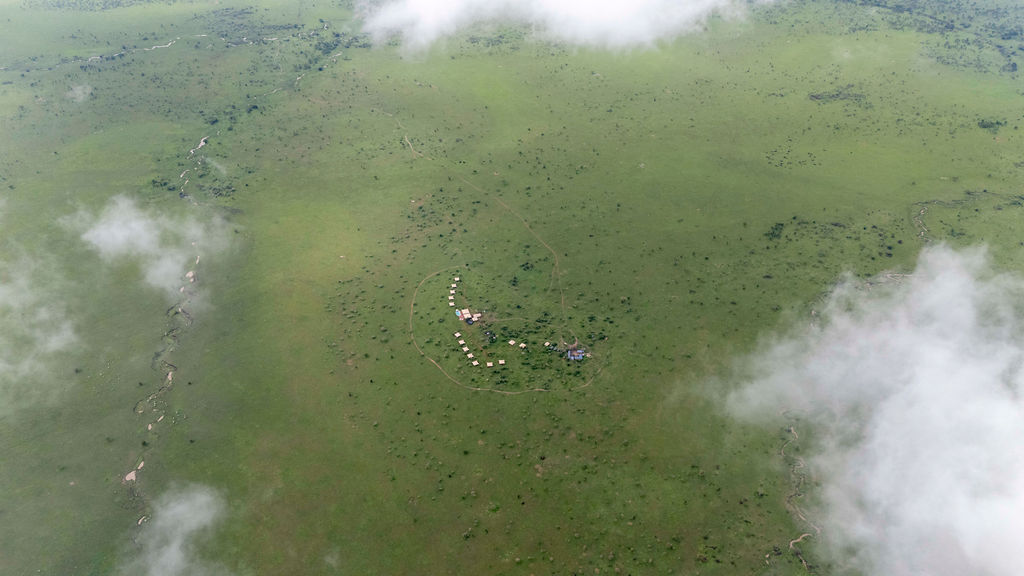
The Serengeti from above, through broken cloud. Shot for Arukore Simba Camp.
Photo: Merit Concept
Arusha to the central Serengeti
| By road | By air | |
|---|---|---|
| Journey | About 335 km, 6 to 8 hours | About 1 h 10 via Manyara (Coastal); 1 h 15 to 1.5 h (Auric Air) |
| Luggage | Whatever fits the vehicle | 15–20 kg, soft bags |
| You arrive | Usually mid-afternoon or later | In time for a morning or afternoon drive |
| On the way | Ngorongoro highlands, villages | The view from above |
Why it matters for photography
Driving in and out of the Serengeti usually costs most of a day each way, and you arrive when the light is harshest. Flying in, you can land in time for a drive and leave after a morning one. Over a short trip that's often two or three extra sessions in the best light. Our guide to park fees, gate hours and travel times has the full timetable.
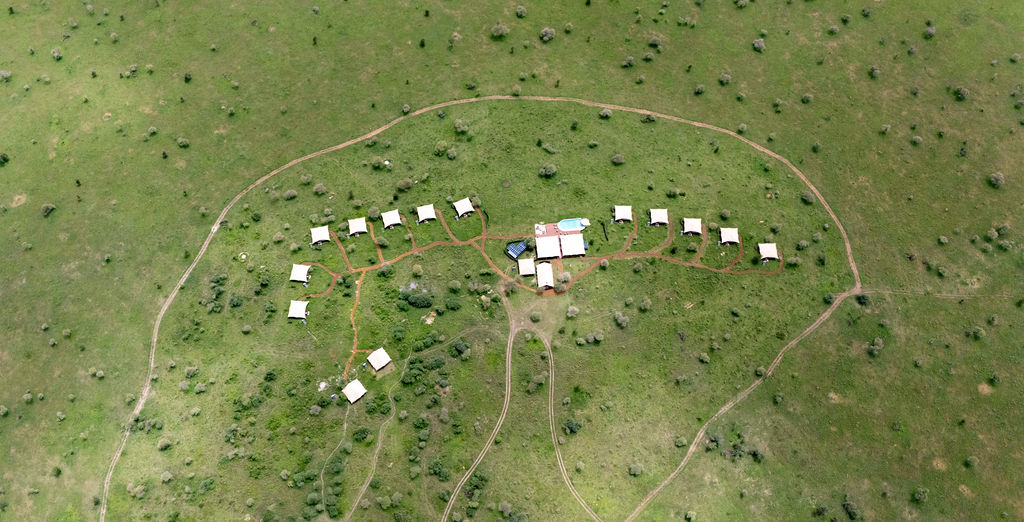
A camp on the open plains, seen from above. Shot for Arukore Simba Camp.
Photo: Merit Concept
What you can bring
Bush-flight baggage allowances
Coastal Aviation
15 kg + 5 kg
Soft bag, plus a personal item
Auric Air
20 kg total
Includes hand luggage and cameras
Regional Air
15 kg
Soft bags
Air Excel
20 kg
Includes hand luggage
Bags must be soft so they fit the small hold; Coastal sets 60 × 45 × 33 cm as the size [1]. For heavy camera kit, book extra in advance: Coastal sells a freight seat that adds 60 kg [1], and Auric Air sells extra weight in 10 kg blocks at US$60 each on safari routes, up to 40 kg, or a freight seat for 75 kg more [2].
Shooting from the window
- Sit away from the sun. Glare and scratches on the window show up far less on the shaded side.
- Get the lens close to the glass to cut reflections, and wear dark clothing.
- Use 1/1000s or faster. Light aircraft bump around, especially in the afternoon.
- If autofocus hunts on the window, switch to manual and focus on the landscape.
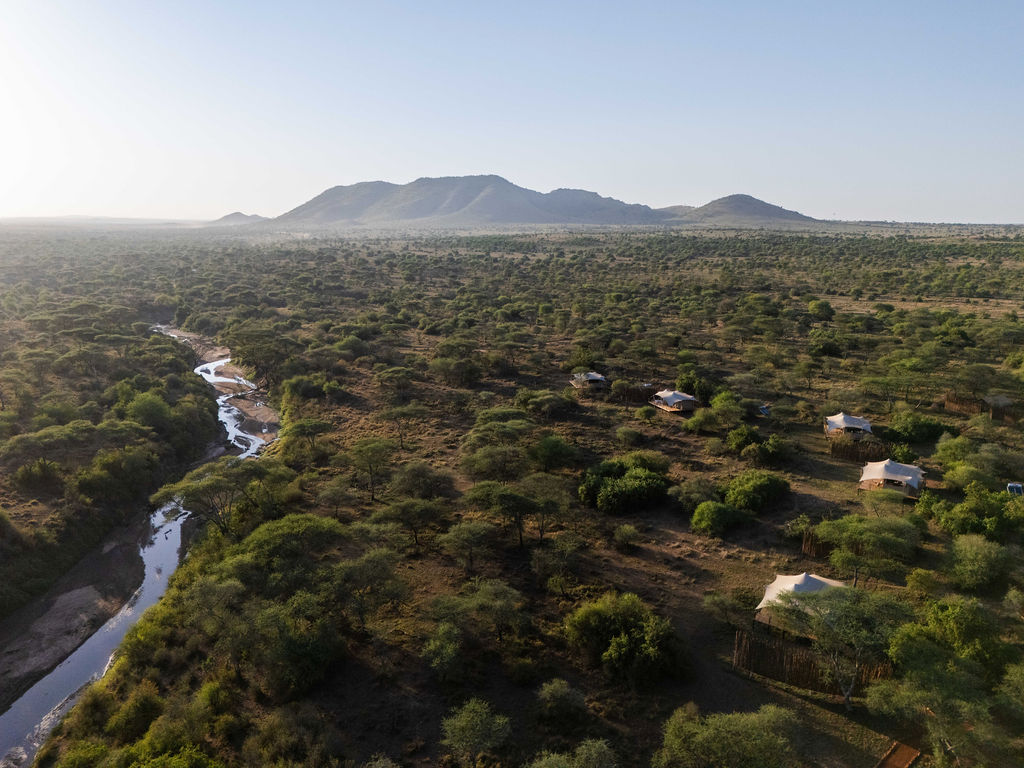
A river camp in the Serengeti, from above. Shot for Tabi Tanzania.
Photo: Merit Concept
Once you've landed, our safari camera settings cheat sheet and our guide to the best time to photograph the Serengeti will help you make the most of the hours you've saved.
Questions travellers ask
How long is the flight from Arusha to the Serengeti?
About 1 hour 10 minutes to Seronera in the central Serengeti on Coastal Aviation's morning flight, which stops at Lake Manyara, and 1 hour 15 minutes to 1.5 hours on Auric Air. The northern Serengeti (Kogatende) takes about 2 hours 20 minutes. By road, the central Serengeti is 6 to 8 hours.
What is the luggage limit on safari flights in Tanzania?
Usually 15 to 20 kg per person, in soft bags. Coastal Aviation allows 15 kg plus a 5 kg personal item; Auric Air allows 20 kg in total, including cameras. Both sell extra weight in advance.
Can I take camera batteries on a bush flight?
Yes, in hand luggage with the terminals protected. Spare lithium batteries and power banks aren't allowed in checked bags, power banks are limited to two per person, and batteries over 100 Wh need airline approval.
Is a fly-in safari worth it for photographers?
Usually, yes. It turns travel days into extra game drives at first and last light, which is when the best photographs happen.
Sources (checked 22 November 2026)
- Coastal Aviation: Luggage policy
- Auric Air: Baggage policy
- Coastal Aviation: Schedule 2023–2027, updated September 2026 (PDF)
- Auric Air: Schedule and rates, 15 June 2025 to 31 December 2026 (PDF)
- IATA: Guidance on power banks and lithium batteries carried by passengers (PDF)
- Regional Air: Baggage policy
- Air Excel: Baggage guidelines
- ClarkVision: Tanzania driving distances
About the author
Arjav Vyas is an award-winning filmmaker and photographer, and the founder of Merit Concept in Arusha. His team made the official destination films for Zanzibar and Kenya, winners of 20+ festival awards, and creates the films, photography, websites and social media that some of East Africa's finest safari lodges, hotels and tourism boards rely on to win guests. More about Arjav.
More from The Hide
Safari planning · 6 min read
Tanzania park fees, gate hours and travel times for 2026/27
20 November 2026
For hospitality brands · 4 min read
Guests don't compare safari lodges. They rehearse the stay.
18 November 2026
For hospitality brands · 3 min read
Why your food photography isn't making anyone hungry
11 November 2026